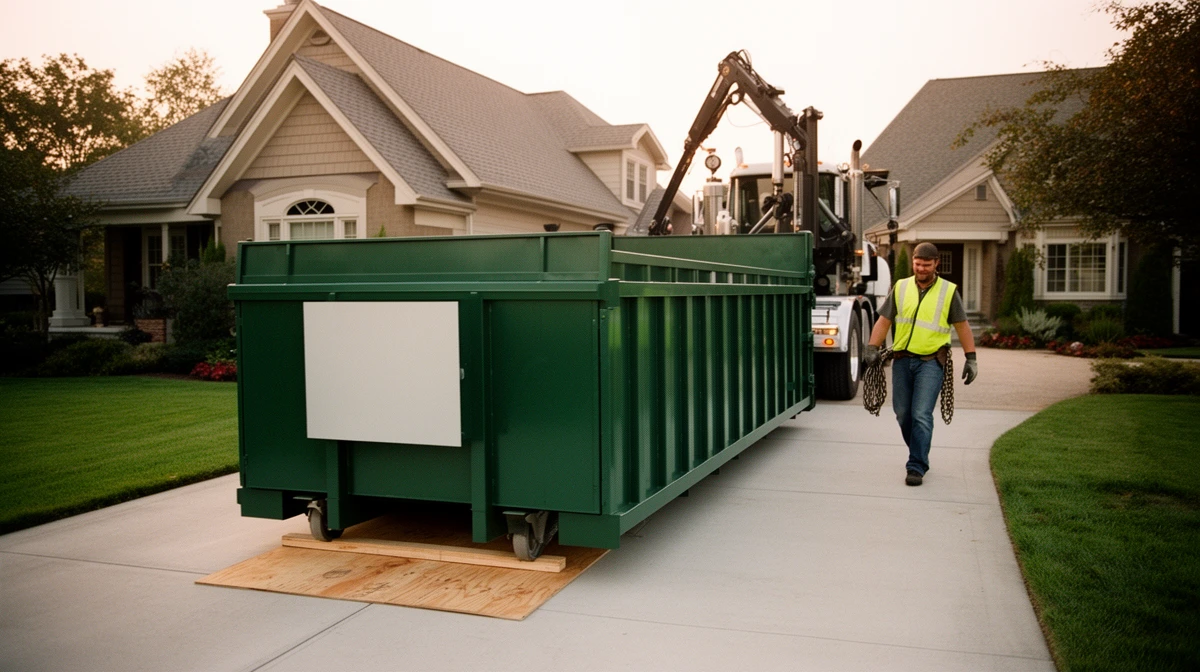
Roofing Dumpster Rental in Palo Verde doesn't fail on availability, it fails on stripped shingles, which are dense enough that roofing containers are deliberately small. Concrete, dirt, brick and tile push a container to its weight limit long before the walls fill up, so the size that matters is the one stamped on the permit, not the one that looks empty. If the driveway is concrete or newly paved, ask whether boards go under the container -- a rolled-off container can crack a surface that looks solid enough to hold it.
Drivers serving Palo Verde see the same mistake on repeat: nobody accounted for an extra shingle layer doubles the debris weight without changing anything you can see from the ground. Palo Verde's debris route ends at aggregate recyclers take clean rock, caliche and concrete, which is why certain materials need separate handling instead of going in with everything else. Once the container leaves Palo Verde, it's headed to aggregate recyclers take clean rock, caliche and concrete, and that stop is part of what decides what you're allowed to throw in it.
Maricopa County haulers default to 10 or 15 yards for roofing, then adjust once they hear what's actually coming out. roofers and homeowners tend to be the ones filling out the Palo Verde request form. Palo Verde doesn't have haulers based inside it; coverage comes from operators already working Maricopa County. Whoever delivers to Palo Verde is running a Maricopa County route that happens to pass through, which is why neighboring towns get similar service. The moment the box sits on the public street instead of your property, municipal right-of-way permits and heavy HOA involvement becomes part of the plan. Confirm the drop date lines up with the regular trash pickup day if the container will share space with the household cans -- a truck can't maneuver around both at once.