Remodeling debris removal in Maricopa County is a logistics question first and a container question second, and the logistics come down to a steady mixed stream from one room at a time rather than a single demolition surge. What happens after pickup matters too: Palo Verde's debris goes to aggregate recyclers take clean rock, caliche and concrete, and that stop is baked into how the container gets loaded. Palo Verde's debris route ends at aggregate recyclers take clean rock, caliche and concrete, which is why certain materials need separate handling instead of going in with everything else.
15 or 20 yards is what most remodeling debris jobs in Maricopa County settle on, since the container is sized to the load, not the square footage. This is homeowners and remodelers's job to arrange, and in Palo Verde that holds true more often than not. Whoever delivers to Palo Verde is running a Maricopa County route that happens to pass through, which is why neighboring towns get similar service.
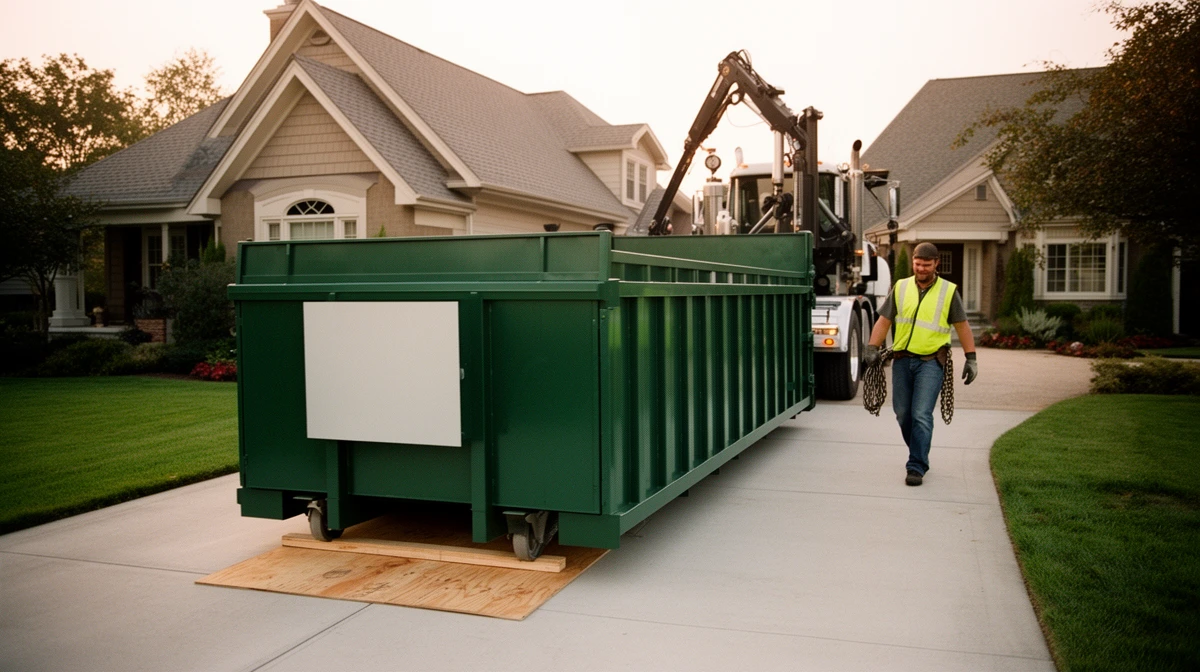
A container headed to Palo Verde is coming out of an existing route through Maricopa County, not a dedicated trip. Household junk runs light in some corners and heavy in others, which usually balances out, so the container size tracks the size of the job rather than any one material. Listed capacity is measured in cubic yards, not by how comfortably debris fits -- a container rated for the job usually still needs everything broken down flat to actually hold it. The question Palo Verde callers should lead with is tile, plaster and mortar are far denser than the cabinetry and drywall they arrive with. The moment the box sits on the public street instead of your property, municipal right-of-way permits and heavy HOA involvement becomes part of the plan. Sort out anything with a battery -- power tools, phones, smoke detectors -- before loading starts; a battery buried in the pile is one of the harder things to catch after the fact.