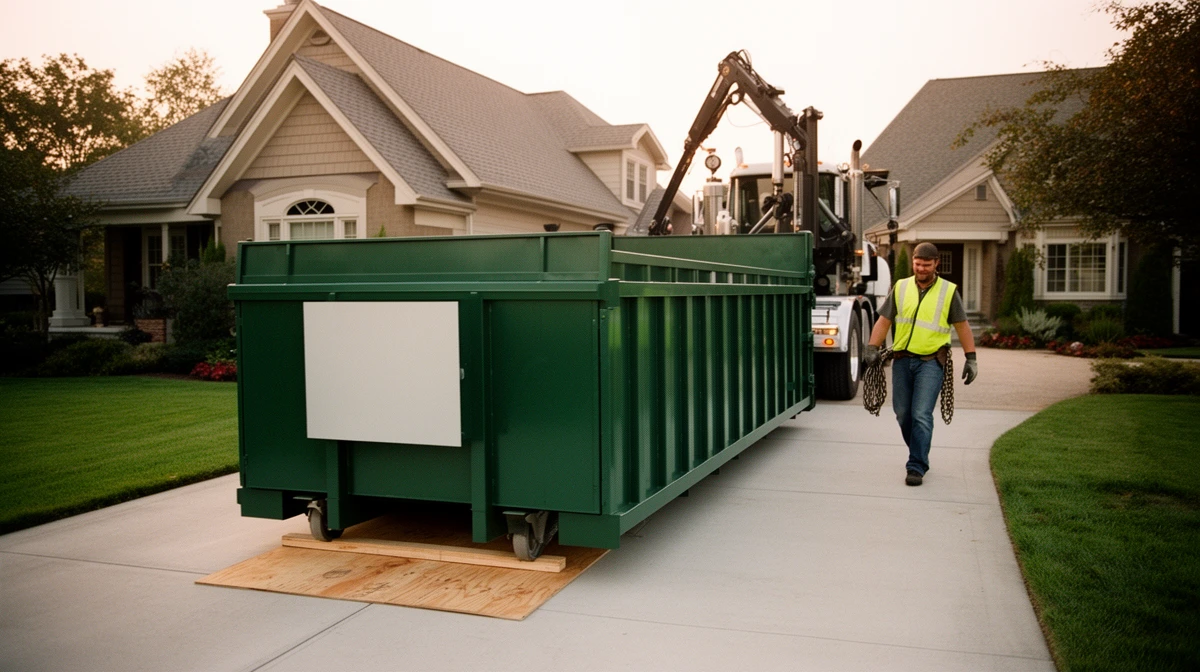
Ask a hauler in Maricopa County what makes storm debris cleanup tricky and they'll point to post-weather clearance, where availability rather than price is the real constraint. Maricopa County crews flag the same issue site after site: putting branches in a hired box wastes the capacity you need for the structural material. The age of housing across Southwest, mostly 1970s-2000s tract housing across the metros, changes what a typical container ends up holding.
Maricopa County sends its debris to aggregate recyclers take clean rock, caliche and concrete, and that's the detail that decides whether certain materials need to be pulled out before the box goes in. Don't size by square footage: storm debris projects in Maricopa County typically land on 20 or 30 yards regardless of how big the room was. This is homeowners after severe weather's job to arrange, and in Arlington that holds true more often than not.
Arlington gets folded into routes built around Maricopa County, so timing depends on where else the truck is headed that day. Southwest operators split their days across Maricopa County and towns like Arlington, which is why one address can wait longer than another nearby. What comes out of a cleanout like this is anyone's guess until it happens, which makes overordering by one size cheaper than betting on a second delivery. Rescheduling a delivery date usually costs nothing with enough notice; canceling the morning of a scheduled drop-off often does not. Ask where that line falls. Driveways are private property, full stop, no permit required. Curbs belong to the city, which is why they call for municipal right-of-way permits and heavy HOA involvement. If the driveway slopes, ask whether the container needs to sit level; a container leaning even slightly can shift its load toward one side.