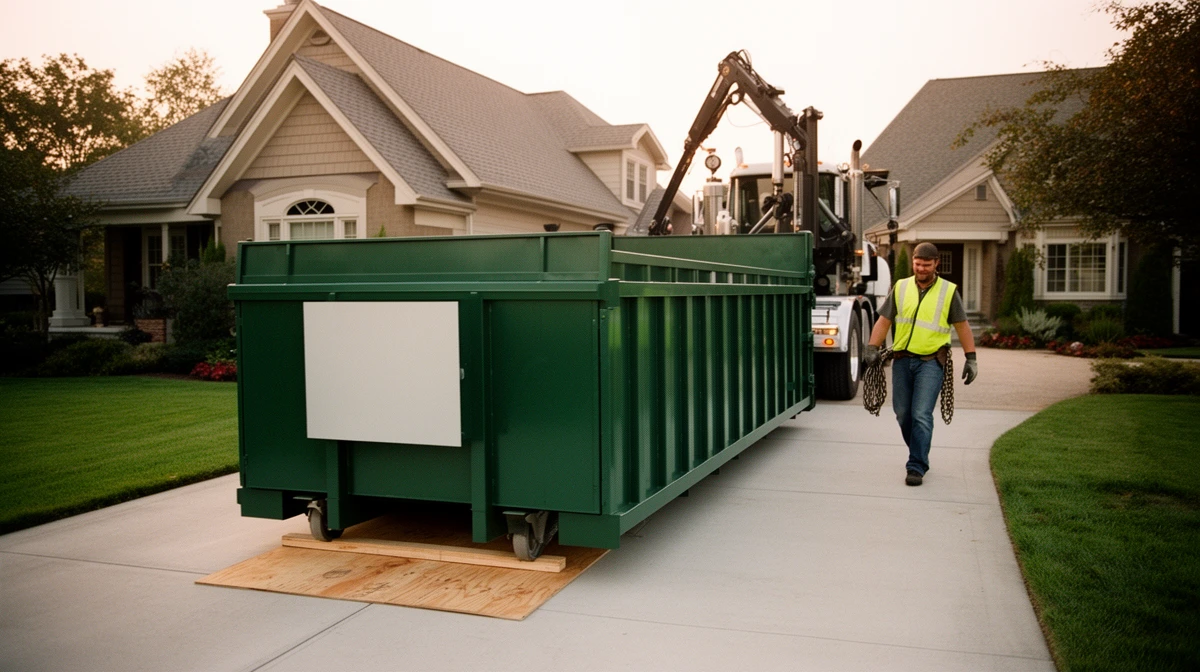
The detail that decides heavy debris dumpster in Maricopa County isn't the truck, it's dense material where the scale ticket, not the container, decides what you pay. If the driveway is concrete or newly paved, ask whether boards go under the container -- a rolled-off container can crack a surface that looks solid enough to hold it. Skip the guesswork for Rio Verde: the painted fill line is a legal limit rather than guidance, and loading past it strands the truck.
The age of housing across Southwest, mostly 1970s-2000s tract housing across the metros, changes what a typical container ends up holding. Maricopa County sends its debris to aggregate recyclers take clean rock, caliche and concrete, and that's the detail that decides whether certain materials need to be pulled out before the box goes in. Don't size by square footage: heavy debris projects in Maricopa County typically land on 10 yards regardless of how big the room was.
contractors and landscapers tend to be the ones filling out the Rio Verde request form. Coverage reaching Rio Verde comes from Maricopa County-based operators extending their existing routes, not setting up new ones. The company that answers for Rio Verde is likely working out of Maricopa County, with Southwest filling in the rest of its territory. Concrete, dirt, brick and tile push a container to its weight limit long before the walls fill up, so the size that matters is the one stamped on the permit, not the one that looks empty. The driveway-versus-street decision is really a paperwork decision: one skips municipal right-of-way permits and heavy HOA involvement, the other requires it. Give the closest cross street along with the address -- routing gets most trucks to the right block, but not every driveway is visible from the street it's listed on.