Being outside the main cluster of stops changes the math
A property sitting apart from Maricopa County's denser delivery routes gets priced with a separate rural charge instead of the usual per-mile creep.
Demolition Debris Removal. Structural material coming down faster than any other phase of a job produces it.
New River, Maricopa County
Demolition debris removal in New River means answering structural material coming down faster than any other phase of a job produces it before anything else. Skip the guesswork for New River: older structures need testing before demolition, because contaminated debris cannot be containerised. What happens after pickup matters too: New River's debris goes to aggregate recyclers take clean rock, caliche and concrete, and that stop is baked into how the container gets loaded.
Arizona housing built 1970s-2000s tract housing across the metros tends to hide different material in the walls than a recent build does, and that shapes what the container ends up holding. The default for demolition debris across New River sits at 30 or 40 yards, a number set by material density, not by how many rooms were involved. This is demolition and general contractors's job to arrange, and in New River that holds true more often than not.
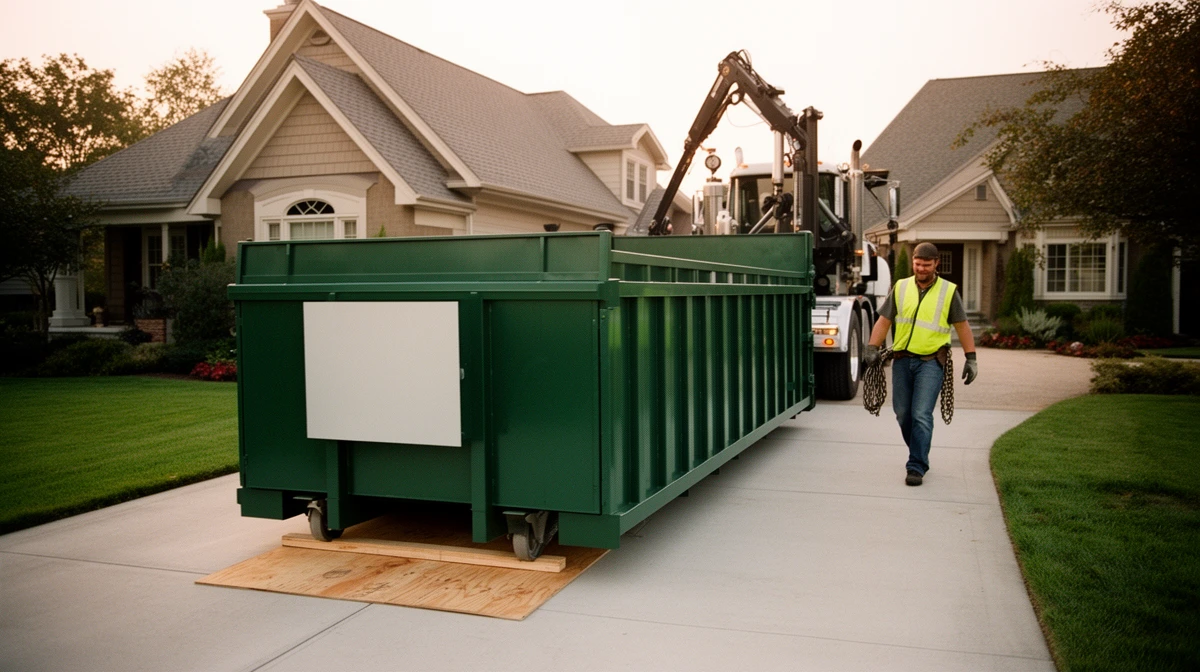
Maricopa County is the hub; New River gets served as an extension of routes that already run through it. New River gets folded into routes built around Maricopa County, so timing depends on where else the truck is headed that day. Nothing in a remodel tear-out is dense on its own, but stacked together it adds up fast, so the container fills toward its weight limit well before the sides do. Ask whether loading labor is included, since most rentals are just the container -- filling it is on the renter unless a labor add-on is arranged separately. Keep the container in the driveway and you skip the paperwork entirely; put it at the curb and you'll need municipal right-of-way permits and heavy HOA involvement. Walk the planned spot the night before and clear anything that shouldn't be under the container when it lands -- a garden hose, a low branch, a parked bike.
Symptoms
What it depends on
A property sitting apart from Maricopa County's denser delivery routes gets priced with a separate rural charge instead of the usual per-mile creep.
Going a day past the quoted window doesn't always trigger a charge right away — there's typically a brief grace period first, just not a long one.
Holiday staffing cuts the number of trucks a Arizona yard sends out well before demand tied to desert heat with a summer monsoon season ever becomes the real bottleneck.
Demolition Debris is billed against a ticket generated at aggregate recyclers take clean rock, caliche and concrete's scale, and requesting a copy is the way to check a number that seems too high. Older structures need testing before demolition, because contaminated debris cannot be containerised.
A backlog at aggregate recyclers take clean rock, caliche and concrete's scale adds time to the driver's day, and that lost time can bump a same-day pickup to the next one.
Dumpster rental costs depend on container size, rental period, drop-off location, and what's going into the bin. Weight limits, prohibited materials, and local permit requirements can also affect the total. A local provider can review your project details and put together a quote for your specific needs.
Calls answered 7 days a week, dumpster haulers covering New River are typically delivering same-day or next-day.
How it works
Tell us the debris type, the address and roughly when the container is needed. That single request is what haulers in Maricopa County use to size the job before they ever call.
The request routes to an independent hauler who already runs routes in that city or unincorporated pocket of the county. No bidding board, no calling around to ten companies yourself.
Expect a call to confirm size, placement and any permit or HOA paperwork the address needs. Delivery and pickup dates get set on this same call.
The hauler drops the container on the agreed date and picks it up once the job is done or the rental period ends. A swap for a longer project is scheduled the same way, directly through the hauler.
Before you book
Pre-1980 structures may hold asbestos or lead paint, neither of which can go in a standard box.
Jobs here go to operators already running Maricopa County. Ask for the delivery window and the collection date together — the second one is what people forget to pin down.
Before a dumpster is dropped at the curb or driveway, get the box size, the delivery and pickup dates, the rental period, the weight limit, and any local placement permit requirement in writing. Desert Dumpster Rental connects you with an independent contractor, so confirming license and insurance is your check to make.
Coverage
We handle demolition debris removal across New River. We are delivering same-day or next-day in this area.
ZIP codes: 85087
Coverage
Serving New River
We cover New River and the surrounding area, delivering same-day or next-day. Answer a few questions about your project and get matched with a local dumpster rental company serving your area.
(888) 603-9169 · Calls answered seven days a week
Confirm the container size, placement location, rental period, and any restricted materials before the dumpster is dropped off. How it works.
Why us
Phoenix, Mesa, Scottsdale, Chandler, Gilbert, Tempe and the rest of Maricopa County each set their own rules for a container sitting in the street versus the driveway. The request notes the city, so the callback comes from a hauler who already knows which desk to call.
Master-planned communities across the East Valley and West Valley often add covenants on how long a container can sit out and whether it has to stay behind the garage line. The request flags an HOA address so the hauler can plan around screening and time limits before drop-off.
Gunite pool shells, decorative rock beds and paver patios are common removal jobs in Maricopa County and run far heavier per yard than household trash. The request captures the material so the callback is from a hauler who brings a container rated for that load.
Swapping dead sod and grass for gravel and decomposed granite leaves a mix of dirt, rock and old irrigation line that doesn't match a typical yard cleanup load. The request notes the material so the hauler who calls back already knows what's going in the box.
Dust storms and flash flooding between July and September can delay a delivery truck or wash out an unpaved pad before drop-off. The request captures the timeline so the hauler can plan the delivery window around the forecast instead of guessing.
Buckeye, Goodyear, Surprise and Queen Creek are adding rooftops faster than almost anywhere else in the state, and framing or stucco lath debris from new construction is a routine haul out there. The request routes to a hauler who already covers that stretch of growth, not one guessing at drive time from the city center.
Questions
Keep the container off the street entirely. A driveway or yard placement in New River sidesteps the permit question altogether.
Only the hazardous stuff: old paint, pesticides, fuel, batteries and anything with refrigerant in it. Those go to a household hazardous waste site instead of the container.
Not exactly, but 30 or 40 yards is the range most people land on. older structures need testing before demolition, because contaminated debris cannot be containerised, so the final call is easier to make with the debris described over the phone.
Usually within a day or two, though Desert heat with a summer monsoon season can push that back if routes are backed up, so an exact date is worth confirming by phone rather than assumed from the website.
Start at 30 or 40 yards and adjust from there. Getting it right matters more than getting it big, because older structures need testing before demolition, because contaminated debris cannot be containerised.
Because the container is rented by the yard, not by the job. 30 or 40 yards is the going figure, and older structures need testing before demolition, because contaminated debris cannot be containerised.
30 or 40 yards, in most cases. Decide based on that rather than instinct, because older structures need testing before demolition, because contaminated debris cannot be containerised.