Prep work fills the calendar early
In the weeks before desert heat with a summer monsoon season sets in, Arizona yards see a run of preventive bookings — brush clearing, storm-proofing — that thins out availability before the season even starts.
Commercial Dumpster Rental. Scheduled containers for a business that produces waste continuously rather than once.
Glendale, Maricopa County
A commercial dumpster in Glendale starts with one question homeowners don't expect: scheduled containers for a business that produces waste continuously rather than once. A container headed to Glendale is coming out of an existing route through Maricopa County, not a dedicated trip. Nothing about this load is extreme on its own; boxes, small furniture and yard debris trade off enough that weight rarely decides the order before volume does.
Ask whether the quote already accounts for the delivery address, or whether it's a base rate that changes once the drive distance gets factored in. collection frequency and the clearance a working lot can spare drive the cost more than the container size. Ask any hauler working Glendale and they will tell you the same thing. Once the container leaves Glendale, it's headed to aggregate recyclers take clean rock, caliche and concrete, and that stop is part of what decides what you're allowed to throw in it.
In Maricopa County, desert heat with a summer monsoon season means haulers plan their busiest stretches around the weather, so timing your rental around it helps. 20 or 30 yards is the typical container for commercial in Maricopa County, sized around weight more than volume. Ask a Glendale dispatcher who calls and the answer is nearly always property managers and business owners. Service in Glendale exists because Maricopa County already has the operators; Glendale is simply within their reach. Curbside drop-offs aren't automatic; they require municipal right-of-way permits and heavy HOA involvement because the street isn't yours to use. Liquids -- paint, oil, solvents -- need to be dried out or solidified before they go in loose; a hauler can't take what could spill in transit.
Symptoms
What it depends on
In the weeks before desert heat with a summer monsoon season sets in, Arizona yards see a run of preventive bookings — brush clearing, storm-proofing — that thins out availability before the season even starts.
There's no credit built into Commercial for finishing under the ton limit; the figure in the quote exists to cap the price, not lower it. Collection frequency and the clearance a working lot can spare drive the cost more than the container size.
Glendale may or may not have a transfer station of its own; when the nearest option is aggregate recyclers take clean rock, caliche and concrete outside city limits, that extra haul is part of the quote.
Once you're past the denser part of Maricopa County, a rural delivery charge often replaces the standard rate rather than scaling with it mile by mile.
Beyond the rental period itself, a permit in Glendale can set its own cutoff for curb placement, and that date doesn't move just because your job runs long.
Dumpster rental costs depend on container size, rental period, drop-off location, and what's going into the bin. Weight limits, prohibited materials, and local permit requirements can also affect the total. A local provider can review your project details and put together a quote for your specific needs.
Calls answered 7 days a week, dumpster haulers covering Glendale are typically delivering same-day or next-day.
How it works
Tell us the debris type, the address and roughly when the container is needed. That single request is what haulers in Maricopa County use to size the job before they ever call.
The request routes to an independent hauler who already runs routes in that city or unincorporated pocket of the county. No bidding board, no calling around to ten companies yourself.
Expect a call to confirm size, placement and any permit or HOA paperwork the address needs. Delivery and pickup dates get set on this same call.
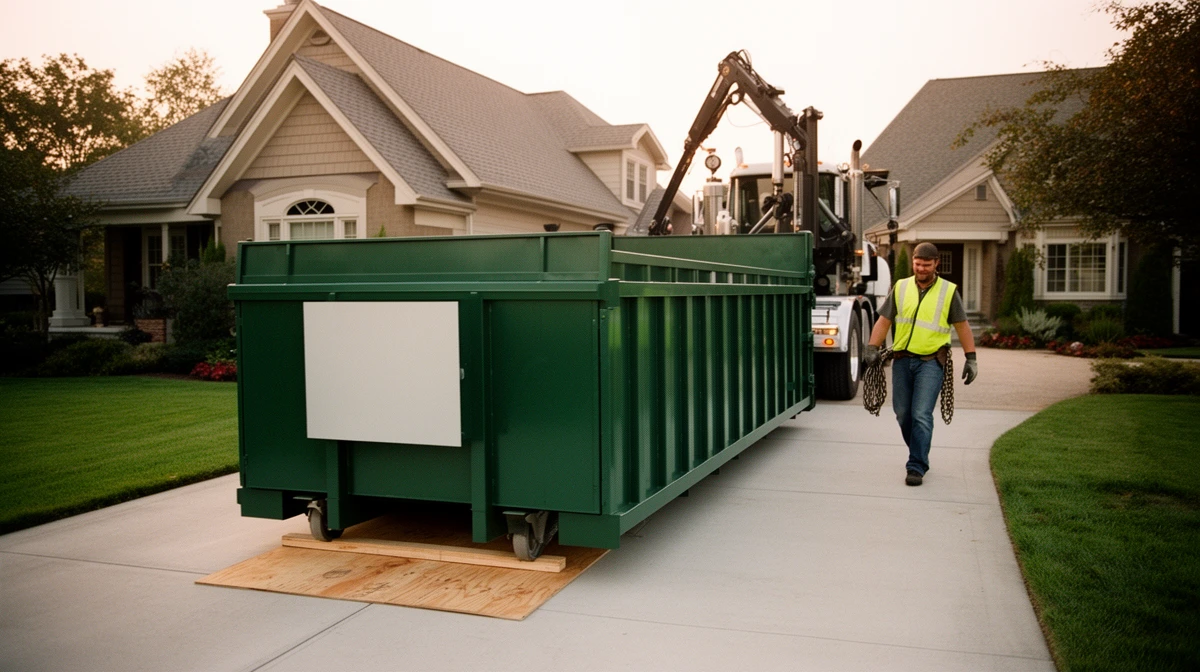
The hauler drops the container on the agreed date and picks it up once the job is done or the rental period ends. A swap for a longer project is scheduled the same way, directly through the hauler.
Before you book
Service frequency and placement clearance for a working lot decide the price more than size does.
Jobs here go to operators already running Maricopa County. Ask for the delivery window and the collection date together — the second one is what people forget to pin down.
Before a dumpster is dropped at the curb or driveway, get the box size, the delivery and pickup dates, the rental period, the weight limit, and any local placement permit requirement in writing. Desert Dumpster Rental connects you with an independent contractor, so confirming license and insurance is your check to make.
Coverage
We handle commercial dumpster rental across Glendale. We are delivering same-day or next-day in this area.
ZIP codes: 85301 · 85302 · 85303 · 85304 · 85305 · 85306 · 85307 · 85308 · 85310
Coverage
Serving Glendale
We cover Glendale and the surrounding area, delivering same-day or next-day. Answer a few questions about your project and get matched with a local dumpster rental company serving your area.
(888) 603-9169 · Calls answered seven days a week
Confirm the container size, placement location, rental period, and any restricted materials before the dumpster is dropped off. How it works.
Why us
Phoenix, Mesa, Scottsdale, Chandler, Gilbert, Tempe and the rest of Maricopa County each set their own rules for a container sitting in the street versus the driveway. The request notes the city, so the callback comes from a hauler who already knows which desk to call.
Master-planned communities across the East Valley and West Valley often add covenants on how long a container can sit out and whether it has to stay behind the garage line. The request flags an HOA address so the hauler can plan around screening and time limits before drop-off.
Gunite pool shells, decorative rock beds and paver patios are common removal jobs in Maricopa County and run far heavier per yard than household trash. The request captures the material so the callback is from a hauler who brings a container rated for that load.
Swapping dead sod and grass for gravel and decomposed granite leaves a mix of dirt, rock and old irrigation line that doesn't match a typical yard cleanup load. The request notes the material so the hauler who calls back already knows what's going in the box.
Dust storms and flash flooding between July and September can delay a delivery truck or wash out an unpaved pad before drop-off. The request captures the timeline so the hauler can plan the delivery window around the forecast instead of guessing.
Buckeye, Goodyear, Surprise and Queen Creek are adding rooftops faster than almost anywhere else in the state, and framing or stucco lath debris from new construction is a routine haul out there. The request routes to a hauler who already covers that stretch of growth, not one guessing at drive time from the city center.
Questions
Usually within a day or two, though Desert heat with a summer monsoon season can push that back if routes are backed up, so an exact date is worth confirming by phone rather than assumed from the website.
Keep the container off the street entirely. A driveway or yard placement in Glendale sidesteps the permit question altogether.
No, both get pulled at the transfer station. Keep fuel, propane, batteries and chemicals aside for a hazardous waste drop-off.
Plan on 20 or 30 yards as a starting point. collection frequency and the clearance a working lot can spare drive the cost more than the container size, which is why two jobs that look the same on paper can need different sizes.
Not reliably. 20 or 30 yards is closer to the mark than a guess from the driveway, since collection frequency and the clearance a working lot can spare drive the cost more than the container size.
Book 20 or 30 yards unless you have a reason not to. That's the trade-off worth naming: collection frequency and the clearance a working lot can spare drive the cost more than the container size.
Aim for 20 or 30 yards to start. The pile's contents drive that number more than its footprint does, given that collection frequency and the clearance a working lot can spare drive the cost more than the container size.