Ask a hauler in Maricopa County what makes residential dumpster tricky and they'll point to a container scaled to a house and a driveway rather than to a job site. 1970s-2000s tract housing across the metros housing across Southwest means older material shows up more often than in newer parts of Arizona, and that changes what fills the box. Once the container leaves Cave Creek, it's headed to aggregate recyclers take clean rock, caliche and concrete, and that stop is part of what decides what you're allowed to throw in it.
In Maricopa County, 10 or 15 yards handles typical residential work, though the hauler will still ask what's inside before confirming. This is homeowners's job to arrange, and in Cave Creek that holds true more often than not. Cave Creek gets folded into routes built around Maricopa County, so timing depends on where else the truck is headed that day.
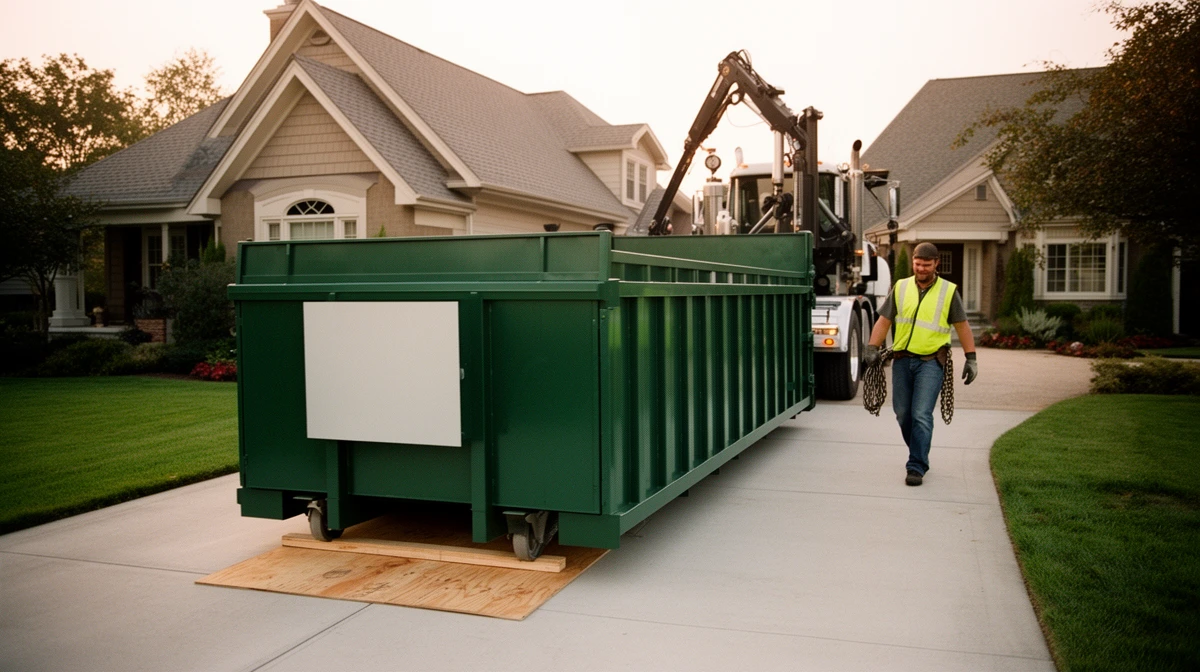
Service in Cave Creek exists because Maricopa County already has the operators; Cave Creek is simply within their reach. Boxy, awkward items waste space around their corners, so a cleanout like this needs more volume than the actual weight of the load would suggest. Ask whether loading labor is included, since most rentals are just the container -- filling it is on the renter unless a labor add-on is arranged separately. Cave Creek homeowners tend to learn about where the box sits, and what it sits on, causes more trouble on residential jobs than the size ever does only after the container is already sitting in the driveway. Curbside drop-offs aren't automatic; they require municipal right-of-way permits and heavy HOA involvement because the street isn't yours to use. Two smaller pickups scheduled a week apart can work better than one large container sitting the whole time, especially on a tight lot with limited space.