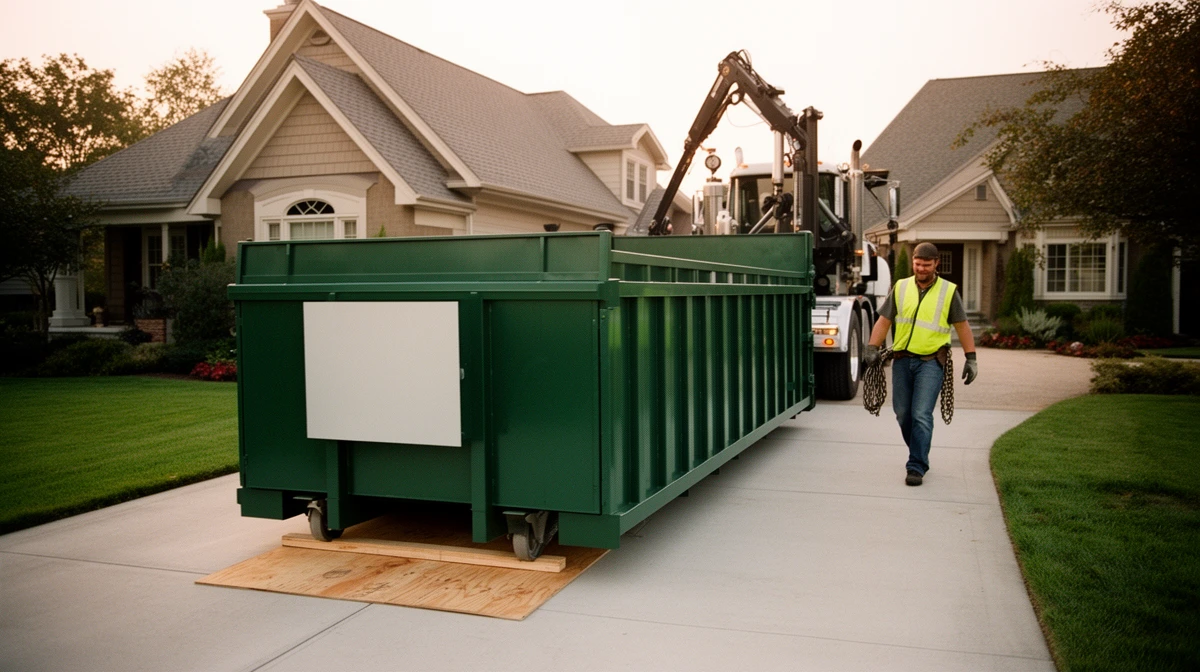
Demolition debris removal in Buckeye means answering structural material coming down faster than any other phase of a job produces it before anything else. There's no dedicated fleet sitting in Buckeye; what serves it is already circulating through Maricopa County. This is a renovation load: lumber and drywall by volume, tile and old fixtures by weight, and the two pull the sizing decision in opposite directions.
Listed capacity is measured in cubic yards, not by how comfortably debris fits -- a container rated for the job usually still needs everything broken down flat to actually hold it. What separates a smooth pickup from a delayed one in Buckeye usually comes down to older structures need testing before demolition, because contaminated debris cannot be containerised. The Southwest climate, desert heat with a summer monsoon season, is the reason haulers in Maricopa County get busier at predictable times of year.
What happens after pickup matters too: Buckeye's debris goes to aggregate recyclers take clean rock, caliche and concrete, and that stop is baked into how the container gets loaded. Maricopa County haulers default to 30 or 40 yards for demolition debris, then adjust once they hear what's actually coming out. Ask a Buckeye dispatcher who calls and the answer is nearly always demolition and general contractors. Maricopa County is the hub; Buckeye gets served as an extension of routes that already run through it. Once the container has to sit where the city, not you, owns the ground, municipal right-of-way permits and heavy HOA involvement is part of the arrangement. If more than one household is contributing debris, agree on what's going in before the container arrives; sorting after the fact is harder than sorting before.